
Grab Bars & Safety
The Guide to Home Grab Bars: How Accessibility Keeps Your Loved One Safe at Home
Your home is your sanctuary. It holds decades of family milestones and cherished memories. But as physical mobility naturally changes, navigating wobbly steps, entryways, stairs, and bathrooms shouldn't become a source of daily anxiety or physical strain for your family.
The bathroom is statistically one of the most hazardous rooms in any household, but true safety doesn't end at the bathroom door. Whether you are a proactive senior looking to secure your long-term independence or an adult child seeking peace of mind for a parent, finding high-quality, practical solutions shouldn't involve high-pressure sales reps or weeks of messy construction.
At INDYpendent Living, we specialize in turnkey home accessibility modifications that help you stay safe at home. As local, father-and-son specialists based in Central Indiana, we are Certified Aging in Place Specialists (CAPS). We combine more than 30 years of construction and engineering experience to deliver honest craftsmanship, whole-home safety, and quick turnaround times.
In this guide, we break down the mechanics of secure grab bar installation, highlight where safety fixtures belong throughout the home, and explain how Central Indiana families can navigate funding and senior-support resources.
1. The Physics of a Fall: Why Towel Bars and Suction Cups Fail
Many homeowners believe they already have a built-in safety net: "I don't need grab bars; I just hold onto my wall-mounted towel rack or the edge of the bathroom vanity when stepping out of the shower."
In accessibility construction, this is known as the "Towel Bar Trap." Standard towel racks, soap dishes, and glass shower door frames are designed for utility or aesthetics — not to support human body weight. They are often secured into thin drywall with small plastic anchors. Under the sudden force of a slip or loss of balance, these anchors can pull straight out of the wall, failing at the exact moment you need support most.
Equally concerning are suction-cup grab bars. These temporary rails rely on a vacuum seal over smooth, non-porous tile. Over time, steam, humidity, and grout lines can weaken that seal. A suction-cup bar may feel sturdy when lightly tested but can slide or release under the dynamic force of an actual fall.
True bathroom fall prevention requires heavy-duty safety bars professionally anchored into appropriate structural support.
2. Professional Installation & Craftsmanship: The Technical Standard
Anchoring a grab bar requires careful planning and professional execution. To provide dependable support for a senior or reduce physical strain on a caregiver, the installation must account for wall construction, placement, user needs, and the forces placed on the bar.
- Advanced stud detection through tile: Standard stud finders may struggle with finished tile surfaces. Our team uses professional detection methods to identify structural framing behind finished walls while minimizing unnecessary damage.
- Specialized tile drilling: Drilling into porcelain, ceramic, or natural stone without cracking the surface requires the proper equipment, technique, and experience.
- Hollow-wall structural anchoring: When studs do not align with the safest or most practical grab-bar location, specialized structural anchoring systems may be used when appropriate rather than relying on standard plastic drywall anchors.
- Water-tight sanitary sealing: Penetrations through shower tile must be properly sealed to help prevent moisture from entering the wall system.
3. The Whole-Home Safety Blueprint: Where Bars and Rails Belong
A professional aging-in-place assessment doesn't look at rooms in isolation; it evaluates the entire home. To reduce physical barriers and prevent falls, safety features should be considered at every major transition point.
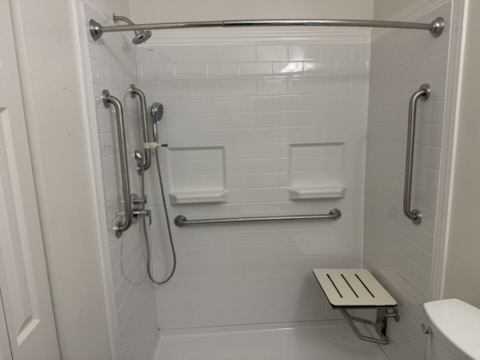
The Bathroom "Rule of Three"
For showers and tubs, we recommend at least three grab bars, with placement focused on both safe entry and stability inside the bathing area:
- Two vertical entry bars: Positioned at or near the shower or tub entry to provide secure handholds when stepping into and out of the wet area.
- One angled or horizontal back-wall bar: Installed along the back wall of the shower or tub to provide continuous support while standing, moving, lowering, or rising.
Exact placement should always be based on the individual's mobility, height, bathing routine, and the structure of the bathroom.
Stairs and Key Entryways
True home safety extends beyond the bathroom. Entrance steps, garage thresholds, and stairs can become major barriers to independence.
- Garage-to-kitchen entries: Many garage entrances involve two or three deep steps. Installing a continuous, securely anchored safety rail can make transitioning from the garage or driveway safer and more manageable.
- Double stair handrails: Traditional staircases often have a handrail on only one side. Adding a secondary, continuous safety rail on the opposite wall provides additional stability and allows users to maintain support on either side.
- Exterior patio steps: Wooden patio steps can warp and become unstable over time due to weather exposure. Securely anchored rails and stable stepping surfaces can restore safer access to outdoor spaces.
4. Navigating Indiana's Eldercare, Funding & Senior Resource Ecosystem
Families are often overwhelmed by the number of organizations, funding programs, healthcare providers, and nonprofits involved in aging in place. Home accessibility is rarely solved by one company alone. The strongest outcomes often come from connecting families with the right combination of contractors, therapists, care managers, funding programs, and community organizations.
INDYpendent Living works within this broader senior-resource ecosystem and can help families understand which organizations may be worth contacting based on their needs. Resources may include:
- Indiana PathWays for Aging: Indiana's Medicaid managed-care program for qualifying adults age 60 and older may provide access to home- and community-based services, including certain environmental accessibility modifications for eligible participants.
- VA home modification resources: Eligible veterans may have access to programs such as the Home Improvements and Structural Alterations (HISA) benefit for medically necessary home modifications.
- USDA Section 504 Home Repair Program: Eligible low-income homeowners in qualifying rural areas may be able to access loans or grants for repairs addressing health, safety, and accessibility needs.
- Area Agencies on Aging (AAAs): Indiana's regional Area Agencies on Aging can help seniors and families navigate local services, benefits, transportation, caregiver support, home-based resources, and other aging-related programs.
- Servants at Work (SAWs): SAWs helps provide wheelchair ramps and other accessibility solutions for individuals with mobility challenges, creating another valuable resource for Indiana families who need safer home entry and exit.
- Local nonprofits and charitable organizations: Organizations such as Catholic Charities and the IU Foundation may be part of the broader network of community and philanthropic resources available to Indiana families, depending on individual circumstances, eligibility, and available programs.
- Occupational therapists and care managers: Independent OTs and care managers can help identify specific mobility challenges and recommend modifications based on an individual's daily routines and physical needs.
Rather than expecting families to navigate this landscape alone, our goal is to help connect the dots. When another organization, funding source, or specialist is better positioned to solve part of the problem, we want families to know where to turn. You can read more on our funding guide page.
5. The INDYpendent Living Standard: Honest Craftsmanship
The home services industry has a major trust deficit. National remodeling companies may send commissioned salespeople who push expensive, one-size-fits-all solutions and then subcontract the actual construction to crews the homeowner has never met.
INDYpendent Living takes a different approach. As a local, family-owned Central Indiana company, our focus is practical recommendations, quality craftsmanship, and accessibility improvements designed around the person who actually lives in the home.
Start Your Whole-Home Safety Plan Today
Don't wait for a wobbly towel bar, slippery shower entry, or dangerous front step to become a medical crisis. The right accessibility improvements can help restore confidence, independence, and peace of mind at home.
If you are looking for professional grab bar installation or whole-home accessibility solutions in Indianapolis and Central Indiana, we're here to help. Skip the automated phone holds and speak directly with our local family owners. Call Sam and David Cooke directly (press 1 to connect straight to the owners) to schedule your professional in-home safety evaluation today.
☎ Call (463) 777-1492